Quelle: L. Matt
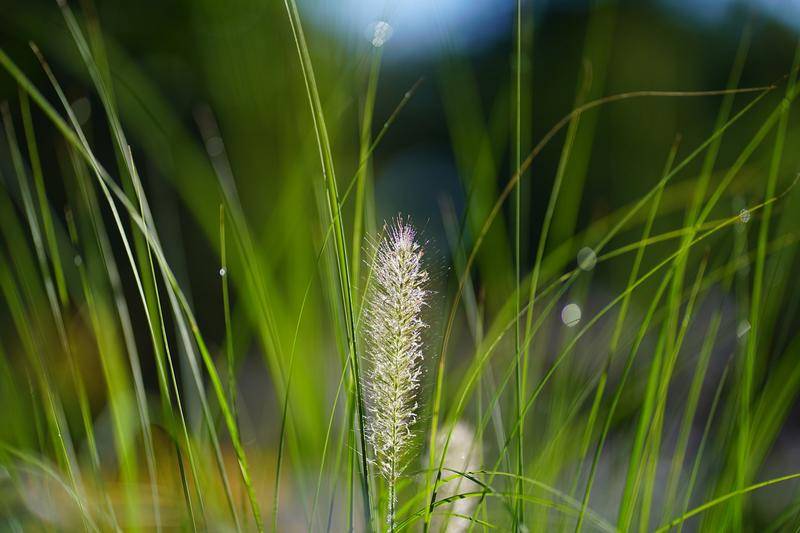
Rushes, reeds and bulrushes grow in the swampy areas around lakes, which are rare in a country with extensive desert and steppe areas like Palestine. They indicate the presence of life-giving water and are therefore considered "messengers of abundance".
They are grass-like plants from which shoes, mats, fences, ropes, boats and huts were made. Baskets could also be woven from this elastic material, such as the rush basket in which Moses was released on the Nile.
Exodus / 2 Moses 2,2 – 10
A man from the descendants of Levi married a woman who also belonged to the descendants of Levi. She became pregnant and gave birth to a son. When she saw that it was a healthy, beautiful child, she kept it hidden for three months. Thereafter, she could no longer hide it. So, she got herself a box of rushes, sealed it with pitch so that no water could pass through, and put the child inside. Then she put the box in the reeds on the banks of the Nile. The child's sister hid nearby to see what would happen to him. Then Pharaoh's daughter came to the banks of the Nile to bathe. She left her servants behind on the bank of the Nile. Suddenly she saw the box in the reeds. She sent a servant to fetch it. When she opened it, she found a crying baby, a little boy, inside. Full of compassion, she cried, "This is one of the Hebrew boys!" The child's sister came out of her hiding place and asked, "Should I call a Hebrew woman who can nurse the child? "Yes, do that," said Pharaoh's daughter. Then the young girl fetched the child's mother, and Pharaoh's daughter said to her, "Take this child and nurse it for me! I will pay you for it." So, it came about that the woman could take her own child home and breast-feed it. When the boy was bigger, she brought him back again. The Pharaoh's daughter accepted him as her son. She said, "I pulled him out of the water." So, she named him Moses.
The papyrus plant was used to make a writable material as early as 3000 BC. For this purpose, the pith of the stalks was cut into very thin strips, which were placed next to each other on a board covered with cloth. Then another layer of papyrus strips was added, which were laid at right angles to the first layer. This layer was covered with cloth again and the whole stack was pressed. The pressure exerted caused plant juices to escape and glued the layers together to form paper. The stalks, which were up to 3 m long, also produced rolls of paper.
Around 1950, scrolls made of animal skins and papyrus were discovered in caves near Qumran on the Dead Sea, dating from 250 BC to 40 AD. The scrolls, which were stored protected in clay jars, are well preserved. One of them is the 7.3 m long, almost undamaged Isaiah scroll. Psalms and other Bible texts are written on other scrolls. It was found that the copying of the Bible texts over the centuries was done very accurately and today's Bible editions are very close to the old traditions.