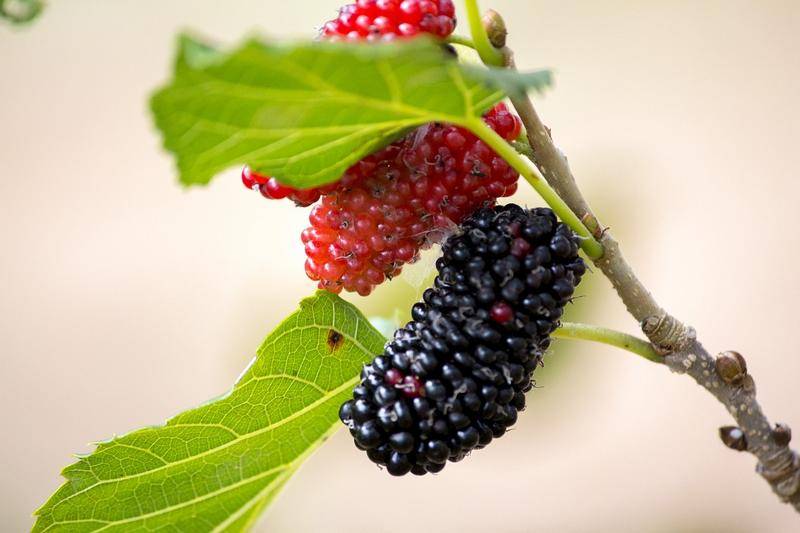
Mulberries were a popular fruit until the 17th century, but are now rarely found in our gardens. Mulberries are among the oldest cultivated plants of mankind. The Greeks once revered the fruits as food of the gods, and among the Romans, the trees were considered the seat of wisdom. The black and the white mulberry tree originate from the Near East. They can grow up to 15 m high.
The white mulberry tree yields leaves that serve as food for silkworm breeding. Silkworm culture has been known for 4500 years.
The black mulberry is a medium-sized deciduous tree. It forms small, greenish flowers. Its fruits resemble blackberries. They are sour, and in the fully ripe stage, sugary sweet. From them juice can be extracted, providing a refreshing drink. From dried fruits of the mulberry tree, tea was prepared. This was considered an effective remedy for inflammation of the mouth.
The fruits were also used for dyeing wool or fabrics and as animal feed. The hard wood was good for building and making furniture.
Since the year 1024, the Benedictine Abbey of Brauweiler has been home to a thousand-year-old mulberry tree, under which, according to legend, the daughter of Emperor Otto II, Mathilde, decided to found the monastery.