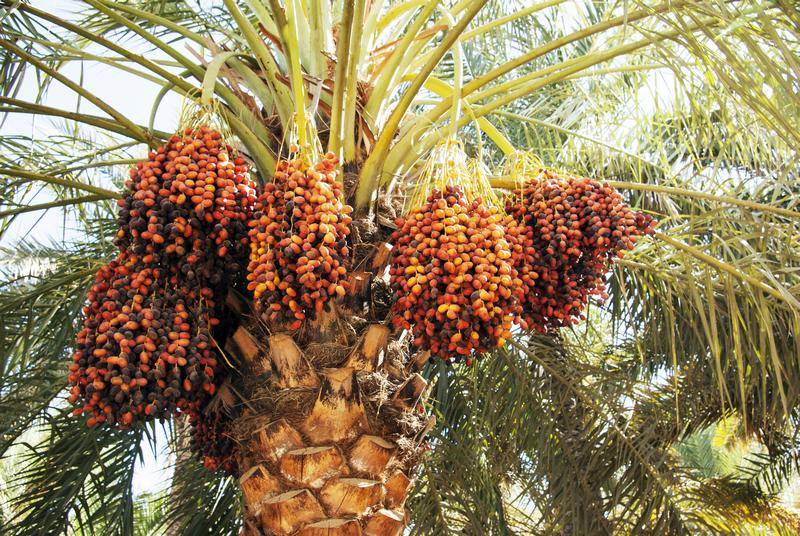
The date palm is known since the 3rd century BC. It grows 10 to 30 meters high, grows straight, is evergreen and can live over 100 years. It bears fruit for the first time after about 5 years. Date palms grow in oases, but also in cities, for example in Jericho. In German, Jericho means "palm city." For people living in desert regions, date palms are particularly vital trees. They provide shade and indicate the presence of water, since their taproots reach deep into the groundwater. The fruits can be used to make bread and syrup, the wood is used for building and fuel, leaves are used for roofing and livestock feed, and the leaf fibers are made into rope, which is then used to make baskets and mats.
The date palm is a symbol of sincerity, justice and holiness. This also explains why the judge Deborah gives justice under a date palm: The sign of her fair and just judgments grow up above her and show all who come to her that they will find help and support here.
In art, the date palm has been a motif for many centuries. In the Jerusalem Temple and on icons of the Eastern Church, it represents the tree of life and the fruitful life of the righteous before God.
In the Bible, the image of the date palm is used to make it clear: Whoever aligns his life with God will grow and bear fruit like an evergreen palm tree. Whoever does not live according to God's commandments is like a withered palm whose roots no longer reach the life-giving water. Whoever is connected to God will receive new strength and energy throughout his life, like a tree that is always supplied with water.